
Introduction
Colorectal cancer remains one of the most preventable yet commonly diagnosed cancers worldwide, and early detection can save lives. If you’re searching for colorectal cancer screening Ahmedabad, understanding the importance of timely screening and the role of colonoscopy in prevention is crucial. At Zanish Cancer Hospital, we recognize that many patients feel anxious about screening procedures, but these tests are your strongest defense against a disease that, when caught early, has a survival rate exceeding 90%. This comprehensive guide will help you understand colorectal cancer screening options, the colonoscopy procedure, risk factors, and how early detection through preventive care can protect your health and give you peace of mind.
Understanding Colorectal Cancer: Why Screening Matters
Colorectal cancer develops in the colon or rectum, typically beginning as small, non-cancerous growths called polyps. While not all polyps become cancerous, certain types can transform into cancer over time—a process that usually takes 10 to 15 years. This slow progression creates a critical window of opportunity for detection and prevention.
The significance of screening lies in its dual purpose: detecting cancer at its earliest, most treatable stages, and identifying and removing precancerous polyps before they develop into cancer. Unlike many other cancers, colorectal cancer is largely preventable through regular screening.
Key statistics about colorectal cancer:
- It’s the third most common cancer diagnosed in both men and women in India
- Early-stage detection increases five-year survival rates to over 90%
- Approximately 70% of colorectal cancer deaths could be prevented with appropriate screening
- The incidence is gradually rising in urban areas including Ahmedabad and other Gujarat cities
Who Should Get Screened? Understanding Your Risk
The Indian medical community, aligned with international guidelines, recommends that individuals at average risk begin colorectal cancer screening at age 45. However, certain factors may warrant earlier or more frequent screening.
Average-risk individuals should start screening at age 45 if they have:
- No personal history of colorectal cancer or polyps
- No family history of colorectal cancer
- No inflammatory bowel disease (Crohn’s disease or ulcerative colitis)
- No genetic syndrome that increases colorectal cancer risk
Higher-risk individuals may need earlier screening if they have:
- A family history of colorectal cancer or certain types of polyps
- A personal history of inflammatory bowel disease
- A known genetic syndrome such as familial adenomatous polyposis (FAP) or Lynch syndrome
- A previous diagnosis of colorectal cancer or high-risk polyps
If you have a first-degree relative (parent, sibling, or child) diagnosed with colorectal cancer, you should begin screening 10 years before the age at which your relative was diagnosed, or at age 40, whichever comes first.
Colonoscopy: The Gold Standard for Detection
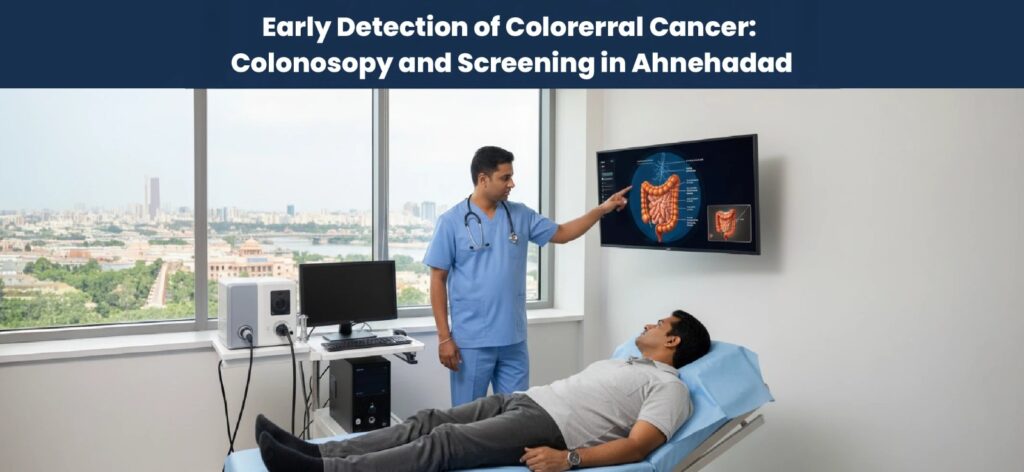
Among various bowel cancer screening methods available, colonoscopy Gujarat remains the most comprehensive and effective diagnostic tool. This procedure allows gastroenterologists to examine the entire length of the colon and rectum using a flexible tube with a camera attached.
What makes colonoscopy the preferred screening method:
Complete visualization: Unlike other tests, colonoscopy allows doctors to view the entire colon, from the rectum to the cecum, detecting abnormalities throughout the digestive tract.
Immediate polyp removal: During the procedure, doctors can remove polyps through a process called polypectomy, eliminating potential cancer before it develops. This immediate intervention is unique to colonoscopy and represents true cancer prevention.
High accuracy: Colonoscopy has the highest sensitivity for detecting both polyps and cancer compared to other screening methods, with detection rates exceeding 95% for larger polyps.
Long screening interval: If no polyps are found, most average-risk individuals won’t need another colonoscopy for 10 years, making it a convenient long-term screening strategy.
The Colonoscopy Procedure: What to Expect
Understanding the colonoscopy process can help alleviate anxiety many patients feel about this important screening.
Preparation phase: The day before your procedure, you’ll follow a special diet and take prescribed laxatives to cleanse your colon. While this preparation requires some planning, thorough bowel preparation is essential for accurate examination.
The procedure: On the day of your colonoscopy, you’ll receive sedation to ensure comfort throughout the 30-45 minute examination. Most patients report minimal discomfort and have no memory of the procedure due to the sedation.
Recovery: After the colonoscopy, you’ll rest in a recovery area for about 30-60 minutes while the sedation wears off. You’ll need someone to drive you home, and most people return to normal activities the following day.
Results: Your gastroenterologist will discuss preliminary findings immediately after you wake up. If polyps were removed, they’ll be sent to a laboratory for analysis, with detailed results available within a week.
Alternative Screening Methods
While colonoscopy remains the gold standard, other digestive cancer detection methods exist for those unable or unwilling to undergo colonoscopy:
Fecal immunochemical test (FIT): This annual home test detects hidden blood in stool samples. While non-invasive, it requires yearly testing and may miss polyps that aren’t bleeding.
Stool DNA test: This test detects DNA changes associated with colorectal cancer and certain polyps. It’s performed every three years but is less sensitive than colonoscopy.
CT colonography (virtual colonoscopy): This imaging test creates detailed images of the colon but cannot remove polyps if found, requiring a follow-up traditional colonoscopy for any abnormalities.
It’s important to note that if any non-colonoscopy screening test shows abnormal results, a diagnostic colonoscopy will be necessary for further evaluation.
Colon Cancer Prevention: Beyond Screening
While regular screening is paramount, lifestyle modifications can reduce your colorectal cancer risk:
Dietary choices: A diet rich in fruits, vegetables, and whole grains while limiting red and processed meats can lower risk. Adequate fiber intake supports digestive health and may reduce cancer development.
Physical activity: Regular exercise (at least 150 minutes of moderate activity weekly) is associated with reduced colorectal cancer risk.
Weight management: Maintaining a healthy body weight reduces cancer risk across multiple cancer types, including colorectal cancer.
Limit alcohol and avoid tobacco: Both excessive alcohol consumption and tobacco use increase colorectal cancer risk and should be minimized or eliminated.
Know your family history: Understanding your family’s cancer history helps you and your healthcare provider determine appropriate screening schedules.
Zanish Cancer Hospital: Your Partner in Prevention and Early Detection
At Zanish Cancer Hospital in Ahmedabad, we provide comprehensive colorectal cancer screening services delivered by experienced gastroenterologists and oncology specialists. Our patient-centered approach ensures you receive the highest quality care throughout your screening journey.
Our colorectal cancer screening services include:
State-of-the-art colonoscopy facilities: We utilize advanced endoscopy equipment with high-definition imaging, enabling superior polyp detection and removal. Our modern colonoscopy suites are designed for patient comfort and safety.
Experienced gastroenterology team: Our board-certified gastroenterologists have extensive experience performing thousands of colonoscopies, ensuring technical excellence and patient safety.
Comprehensive risk assessment: We evaluate your personal and family history to recommend personalized screening schedules tailored to your individual risk profile.
Advanced polyp removal techniques: Our specialists are trained in sophisticated polypectomy techniques, including removal of larger or complex polyps that might otherwise require surgical intervention.
Pathology services: Our in-house pathology laboratory provides timely, accurate analysis of any tissue samples collected during your procedure.
Patient education and support: We believe informed patients make better health decisions. Our team takes time to explain procedures, answer questions, and address concerns, ensuring you feel confident about your care.
Convenient location and scheduling: Situated in Ahmedabad, we serve patients throughout Gujarat with flexible scheduling options to accommodate your busy life.
Follow-up care coordination: If polyps are found or further treatment is needed, we provide seamless coordination between our gastroenterology and oncology departments for comprehensive cancer care.
Overcoming Barriers to Screening
Despite the proven benefits of colorectal cancer screening, many eligible individuals delay or avoid screening. Common concerns include:
Fear of the procedure: Modern sedation techniques make colonoscopy comfortable, with most patients experiencing no pain or memory of the examination.
Embarrassment: Healthcare professionals perform these procedures daily and approach them with professionalism and respect for your dignity.
Preparation concerns: While bowel preparation requires planning, our team provides clear instructions and support to make the process as manageable as possible.
Cost considerations: Many insurance plans cover preventive colonoscopy screening. Our administrative staff can help you understand your coverage and explore available options.
Remember, the temporary inconvenience of screening is minor compared to the peace of mind it provides and the potential life-saving benefits of early detection.
Conclusion: Take Control of Your Health Today
Colorectal cancer screening, particularly colonoscopy, represents one of the most effective cancer prevention strategies available. If you’re 45 or older, have risk factors, or are due for screening, don’t delay this potentially life-saving procedure. Early detection through colorectal cancer screening Ahmedabad services at Zanish Cancer Hospital can identify problems when they’re most treatable—or prevent cancer from developing altogether.
Your health is your most valuable asset, and proactive screening is an investment in your future. The gastroenterology team at Zanish Cancer Hospital is committed to providing compassionate, expert care throughout your screening experience.
Take the next step: Contact Zanish Cancer Hospital today to schedule your colorectal cancer screening consultation. Our specialists will assess your individual risk factors, answer your questions, and help you determine the most appropriate screening plan for your needs. Early detection saves lives—make your health a priority.
Medical Disclaimer: This article is for informational purposes only and does not constitute medical advice. Always consult with qualified healthcare professionals regarding your specific health concerns, risk factors, and appropriate screening schedules. Individual medical situations vary, and screening recommendations should be personalized based on your complete medical history and risk profile.
Make Appointment
Address
1st Floor, Viva Atelier, Opp. B.D. Patel House, Near Sardar Patel Statue, Behind Sardar Patel Colony, Naranpura, Ahmedabad-380014. (Gujarat) India
Contact Us
+91 7433852300