
Introduction
A persistent mouth sore, unexplained white patch, or lingering discomfort might seem minor, but these could be early indicators of a serious condition requiring prompt attention. Understanding oral cancer symptoms in Ahmedabad empowers you to recognize warning signs early, when treatment is most effective. Oral cancer, affecting the lips, tongue, cheeks, throat, or other mouth structures, is highly treatable when detected in its initial stages.
In Gujarat, where tobacco use remains prevalent, awareness of oral cancer warning signs becomes especially critical. Many patients dismiss early symptoms as routine dental issues, delaying diagnosis until the cancer progresses. This article provides comprehensive information about oral cancer detection, helping you identify concerning changes and understand when professional evaluation is necessary. At Zanish Cancer Hospital, we believe informed patients make better health decisions, and early consultation can significantly improve outcomes.
Understanding Oral Cancer and Its Prevalence
Oral cancer, also called mouth cancer, develops when cells in the oral cavity or oropharynx grow abnormally and uncontrollably. This category includes cancers of the lips, tongue, floor of the mouth, cheeks, gums, hard and soft palate, and throat.
Oral Cancer Statistics in India: India accounts for nearly one-third of global oral cancer cases, with higher incidence rates in states where tobacco and betel quid consumption is common. Gujarat’s tobacco usage patterns make oral cancer screening and awareness particularly important for residents.
The good news: oral cancer detected at stage I has survival rates exceeding 80-90%, emphasizing why recognizing early symptoms matters tremendously.
Early Warning Signs: What to Watch For
Many oral cancer symptoms initially appear subtle or mimic common dental problems. Vigilance regarding persistent changes in your mouth is essential.
Visible Changes and Lesions
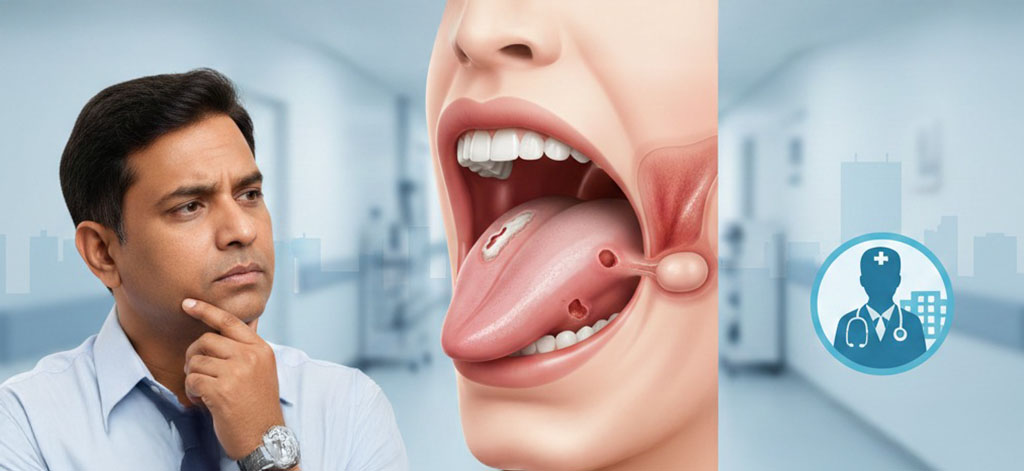
White or Red Patches: Leukoplakia appears as white patches that cannot be scraped off, while erythroplakia presents as red, velvety patches. Both warrant professional examination, as they may represent precancerous or cancerous changes.
Non-Healing Sores: Mouth sores that persist beyond two to three weeks without healing require evaluation. Unlike canker sores or injury-related ulcers that heal relatively quickly, cancerous lesions remain unchanged or worsen over time.
Unusual Lumps or Thickening: Any lump, bump, or thickened area in the mouth, lips, or throat should be examined. These may feel firm or irregular and might not cause pain initially.
Functional Symptoms
Difficulty Swallowing or Chewing: Persistent difficulty moving your tongue, jaw, or swallowing (dysphagia) can indicate oral cancer, particularly in the throat or tongue base. You might feel like food is getting stuck or experience pain while swallowing.
Speech Changes: Unexplained changes in how you speak, persistent hoarseness, or feeling like your voice sounds different may signal throat or tongue involvement.
Numbness or Loss of Sensation: Numbness in the mouth, lips, face, or neck without an apparent cause requires investigation. This can occur when tumors affect nerves.
Pain and Discomfort
Persistent Mouth or Ear Pain: Chronic pain in the mouth, jaw, or ear that doesn’t resolve is a concerning symptom. Oral cancers sometimes cause referred pain to the ear.
Jaw Stiffness: Difficulty opening your mouth fully (trismus) or jaw stiffness can indicate advanced oral cancer affecting muscles or jaw structures.
Other Warning Signs
- Loose teeth without periodontal disease
- Poorly fitting dentures that previously fit well
- Unexplained bleeding in the mouth
- Chronic sore throat
- Lump or mass in the neck
- Unintentional weight loss
Important Note: Having one or more of these symptoms doesn’t automatically mean cancer. Many conditions cause similar signs. However, any symptom persisting beyond two to three weeks deserves professional evaluation.
Risk Factors: Who Should Be Most Vigilant
Understanding your risk profile helps determine appropriate screening frequency.
Major Risk Factors:
Tobacco Use: Smoking cigarettes, bidis, or using smokeless tobacco (gutka, khaini, paan) dramatically increases oral cancer risk. Gujarat’s cultural practices involving tobacco consumption make this particularly relevant for local residents.
Alcohol Consumption: Heavy alcohol use significantly elevates risk, and combining tobacco with alcohol creates synergistic effects that multiply cancer likelihood.
HPV Infection: Human papillomavirus, particularly HPV-16, is increasingly recognized as a risk factor for oropharyngeal cancers affecting the throat and tongue base.
Age and Gender: Risk increases with age, particularly after 40. Men develop oral cancer twice as often as women, though this gap is narrowing.
Sun Exposure: Excessive sun exposure increases lip cancer risk.
Poor Oral Hygiene: Chronic irritation from sharp teeth, ill-fitting dentures, or poor dental care may contribute to cancer development.
Dietary Factors: Diets low in fruits and vegetables may increase susceptibility.
If you have multiple risk factors, regular oral cancer screenings become especially important.
The Importance of Early Detection
Early-stage oral cancer often causes minimal symptoms, making routine screenings crucial for at-risk individuals. When detected early:
- Treatment is less invasive and intensive
- Survival rates are significantly higher
- Functional outcomes (speech, swallowing, appearance) are better preserved
- Recovery is typically faster with fewer complications
- Treatment costs are substantially lower
Conversely, advanced oral cancer requires aggressive treatment including extensive surgery, radiation, and chemotherapy, with greater impact on quality of life.
Oral Cancer Screening and Diagnosis
Self-Examination: Monthly self-checks help you become familiar with your mouth’s normal appearance. Using good lighting and a mirror, examine your lips, gums, tongue (including sides and underneath), cheeks, roof and floor of your mouth, and throat.
Professional Screening: Dentists and doctors can perform thorough oral examinations during routine visits. Special screening technologies like VELscope or toluidine blue staining help identify suspicious areas.
Diagnostic Procedures: If abnormalities are found, your healthcare provider may recommend:
- Biopsy (removing tissue for microscopic examination)
- Imaging studies (CT, MRI, PET scans)
- Endoscopy for throat examination
- HPV testing
Biopsy remains the definitive diagnostic method for confirming oral cancer and determining its type and characteristics.
Prevention Strategies for Oral Health
While not all oral cancers are preventable, you can significantly reduce risk:
- Eliminate tobacco use in all forms
- Limit alcohol consumption or abstain completely
- Maintain excellent oral hygiene with regular brushing, flossing, and dental visits
- Eat a nutrient-rich diet with plenty of fruits and vegetables
- Protect your lips from excessive sun exposure
- Get HPV vaccination if age-appropriate
- Address chronic irritation from dental appliances or broken teeth
For tobacco users, cessation represents the single most impactful prevention measure. Resources and support programs are available in Ahmedabad to help individuals quit.
Cultural Considerations in Gujarat
Gujarat’s cultural practices require specific attention regarding oral cancer prevention. Paan, gutka, and other tobacco-containing products remain socially embedded despite known health risks. Community education emphasizing the connection between these practices and tobacco-related cancer in Gujarat is essential.
Many individuals begin tobacco use at young ages, creating decades of exposure. Healthcare providers in Ahmedabad increasingly focus on culturally sensitive counseling that respects traditions while clearly communicating health consequences.
Living After Reconstruction
Successful reconstruction transforms lives, though patients should maintain realistic expectations. Most patients experience significant functional improvement in eating, drinking, and speech, enhanced facial appearance and symmetry, ability to wear dental prosthetics, reduced pain and discomfort, and improved self-confidence and social engagement.
However, reconstructed tissues differ from original structures. Speech may not return to pre-cancer quality, swallowing may require dietary modifications, facial appearance improves but may not look identical to pre-surgery, and sensation in reconstructed areas is often diminished.
Long-term follow-up monitors for cancer recurrence, manages late treatment effects, optimizes functional outcomes through ongoing therapy, and addresses dental rehabilitation needs. Many patients successfully return to work and regular activities, finding a new normal that, while different, allows meaningful life engagement.
Zanish Cancer Hospital's Comprehensive Oral Cancer Care
Zanish Cancer Hospital provides specialized oral cancer screening and treatment services designed for Ahmedabad residents.
Expert Diagnostic Services: Our team includes experienced head and neck oncologists, oral surgeons, and radiologists skilled in identifying and diagnosing oral cancers. We utilize advanced imaging and biopsy techniques for accurate assessment.
Comprehensive Screening Programs: We offer thorough oral cancer screenings for at-risk individuals, using both clinical examination and advanced detection technologies. Early detection programs target high-risk populations, including tobacco users and those with family histories.
Multidisciplinary Treatment Approach: Oral cancer treatment requires coordination among surgical oncologists, radiation oncologists, medical oncologists, speech therapists, nutritionists, and reconstructive surgeons. Our integrated team ensures comprehensive care tailored to each patient’s specific situation.
Patient Education and Support: We recognize that cancer diagnosis creates anxiety and uncertainty. Our team provides clear explanations, answers questions, and supports patients and families throughout the diagnostic and treatment journey.
Tobacco Cessation Support: Understanding that tobacco use significantly contributes to oral cancer in our region, we offer tobacco cessation counseling and resources to help patients reduce their risk.
Accessibility in Ahmedabad: Located to serve Gujarat residents, we make expert oral cancer care accessible without requiring travel outside the state. Our team communicates in local languages and understands regional health practices and concerns.
Conclusion and Next Steps
Recognizing oral cancer symptoms in Ahmedabad early can be lifesaving. Persistent mouth sores, white or red patches, lumps, difficulty swallowing, or unexplained pain warrant prompt professional evaluation. While many oral symptoms have benign causes, timely assessment ensures serious conditions receive appropriate attention.
If you notice concerning changes in your mouth lasting more than two to three weeks, don’t wait. Early consultation with qualified healthcare providers leads to better outcomes when problems exist and provides peace of mind when they don’t.
Take Action Today: Schedule a consultation at Zanish Cancer Hospital if you’ve noticed persistent oral symptoms or have risk factors requiring screening. Our specialists provide thorough evaluations, accurate diagnoses, and compassionate care. Whether you need screening, diagnostic services, or treatment, we’re here to support your oral health and overall wellbeing.
Don’t let uncertainty delay care. Contact Zanish Cancer Hospital to schedule an oral cancer screening or consultation with our head and neck oncology specialists. Early detection saves lives.
Medical Disclaimer: This article provides general educational information about oral cancer symptoms and should not replace professional medical advice. Any persistent oral symptoms require evaluation by qualified healthcare providers who can assess your specific situation and recommend appropriate testing or treatment.
Make Appointment
Address
1st Floor, Viva Atelier, Opp. B.D. Patel House, Near Sardar Patel Statue, Behind Sardar Patel Colony, Naranpura, Ahmedabad-380014. (Gujarat) India
Contact Us
+91 7433852300