
Introduction
A gastrointestinal cancer diagnosis brings uncertainty and fear, but advances in surgical oncology offer renewed hope for patients seeking effective treatment. If you’re exploring options for GI cancer surgery Ahmedabad, understanding your treatment pathway is essential for making informed decisions about your care. Gastrointestinal cancers affect vital organs of the digestive system—including the stomach, esophagus, pancreas, liver, intestines, and colon—and require specialized surgical expertise combined with comprehensive multidisciplinary care. At Zanish Cancer Hospital, we recognize that each patient’s journey is unique, and our surgical oncology team is dedicated to providing advanced, personalized treatment that addresses both the medical complexities of GI cancers and the emotional challenges patients and families face. This guide will help you understand gastrointestinal cancer surgery, treatment approaches, and how expert care can improve outcomes and quality of life.
Understanding Gastrointestinal Cancers
Gastrointestinal cancers encompass malignancies affecting any part of the digestive tract, from the esophagus to the rectum, as well as accessory digestive organs like the liver and pancreas. These cancers represent a significant health concern in India, with rising incidence rates in urban areas including Ahmedabad and throughout Gujarat.
Common types of GI cancers include:
Stomach (gastric) cancer: Develops in the stomach lining and may present with symptoms like persistent indigestion, unexplained weight loss, abdominal pain, and difficulty swallowing.
Esophageal cancer: Affects the tube connecting the throat to the stomach, often causing difficulty swallowing, chest pain, and regurgitation.
Pancreatic cancer: One of the most challenging GI malignancies, often diagnosed at advanced stages due to subtle early symptoms like jaundice, back pain, and digestive issues.
Liver cancer: Can be primary (originating in the liver) or secondary (spread from other cancers), presenting with abdominal pain, weight loss, and jaundice.
Colorectal cancer: Affects the colon or rectum, typically presenting with changes in bowel habits, rectal bleeding, and abdominal discomfort.
Small intestine cancer: Though rare, can cause abdominal pain, bleeding, and obstruction.
Early detection significantly improves treatment outcomes, making awareness of symptoms and regular health screenings crucial for high-risk individuals.
Risk Factors and Warning Signs
Understanding risk factors helps identify individuals who may benefit from enhanced surveillance and early intervention.
Common risk factors for GI cancers:
- Tobacco use and excessive alcohol consumption
- Chronic infections (H. pylori for stomach cancer, hepatitis for liver cancer)
- Dietary factors including high consumption of processed foods, smoked meats, and low fiber intake
- Family history of GI cancers or genetic syndromes
- Chronic inflammatory conditions like inflammatory bowel disease
- Obesity and sedentary lifestyle
- Previous radiation therapy to the abdomen
- Occupational exposures to certain chemicals
Warning signs requiring medical evaluation:
- Persistent abdominal pain or discomfort
- Unexplained weight loss
- Changes in appetite or difficulty swallowing
- Persistent nausea, vomiting, or heartburn
- Blood in stool or black, tarry stools
- Jaundice (yellowing of skin and eyes)
- Persistent fatigue and weakness
- New onset or worsening digestive symptoms
If you experience any of these symptoms persistently, consult a healthcare professional promptly. While these symptoms don’t always indicate cancer, early evaluation is essential for timely diagnosis and treatment.
The Role of Surgery in GI Cancer Treatment
Surgery remains a cornerstone of curative treatment for many gastrointestinal cancers, particularly when the disease is diagnosed at early or locally advanced stages. The primary goal of stomach cancer treatment through surgery is complete tumor removal with clear margins while preserving as much normal organ function as possible.
Types of GI cancer surgical procedures:
Gastrectomy (for stomach cancer): Partial or total removal of the stomach, depending on tumor location and extent. Surgeons reconstruct the digestive tract to restore continuity and function.
Esophagectomy (for esophageal cancer surgery): Removal of part or all of the esophagus, with reconstruction using the stomach or intestine to restore swallowing function.
Whipple procedure (for pancreatic cancer care): A complex operation removing the head of the pancreas, duodenum, gallbladder, and part of the bile duct, typically performed for pancreatic head tumors.
Hepatectomy (for liver cancer treatment): Removal of the tumor-containing portion of the liver. The liver’s unique regenerative capacity allows remaining healthy tissue to grow and restore function.
Colectomy: Removal of all or part of the colon for colorectal cancers, often performed laparoscopically for faster recovery.
Minimally invasive approaches: Many GI cancer surgeries can now be performed using laparoscopic or robotic techniques, offering benefits including smaller incisions, reduced pain, shorter hospital stays, and faster recovery.
Multidisciplinary Treatment Approach
Modern gastric oncology recognizes that optimal cancer care extends beyond surgery alone. A comprehensive treatment plan may incorporate multiple therapeutic modalities:
Neoadjuvant therapy: Chemotherapy or radiation administered before surgery to shrink tumors, making them more operable and potentially improving surgical outcomes.
Adjuvant therapy: Post-surgical treatment with chemotherapy, radiation, or targeted therapy to eliminate remaining cancer cells and reduce recurrence risk.
Palliative procedures: When curative surgery isn’t possible, palliative surgical interventions can relieve symptoms, improve quality of life, and extend survival.
Nutritional support: GI cancer surgery affects digestive function, making nutritional management crucial. Specialized dietitians help patients maintain adequate nutrition during treatment and recovery.
Pain management: Comprehensive pain control strategies ensure patient comfort throughout the treatment journey.
What to Expect: The Surgical Journey
Understanding the surgical process helps patients and families prepare mentally and practically for treatment.
Pre-operative evaluation: Comprehensive assessment includes imaging studies (CT scans, MRI, PET scans), endoscopy, blood tests, and cardiac and pulmonary evaluations to ensure surgical safety.
Surgical planning: Your surgical oncologist will explain the planned procedure, potential risks and benefits, expected outcomes, and alternative options. This shared decision-making process ensures your treatment aligns with your values and goals.
The operation: Depending on the procedure’s complexity, GI cancer surgery typically takes 3-8 hours. You’ll be under general anesthesia, and the surgical team monitors you continuously.
Post-operative care: Recovery begins in the intensive care unit or surgical ward, where medical staff closely monitor your vital signs, pain levels, and early recovery. Hospital stays range from 5-14 days depending on the procedure’s extent.
Recovery and rehabilitation: Full recovery takes weeks to months. Physical therapy, nutritional support, and gradual activity increase all contribute to optimal healing.
Follow-up care: Regular surveillance with imaging, blood tests, and clinical examinations helps detect any recurrence early and manage long-term side effects.
Advances in Surgical Techniques
Surgical oncology continues evolving, with innovations improving outcomes and reducing treatment burden:
Minimally invasive surgery: Laparoscopic and robotic approaches minimize trauma, accelerate recovery, and reduce complications while maintaining oncologic effectiveness.
Enhanced recovery protocols: Evidence-based perioperative care pathways optimize pain control, nutrition, and mobilization, significantly shortening hospital stays and improving recovery quality.
Precision surgery: Advanced imaging and surgical techniques enable more precise tumor removal while preserving healthy tissue and organ function.
Improved reconstruction: Sophisticated reconstructive techniques restore digestive continuity and function, enhancing post-surgical quality of life.
Zanish Cancer Hospital: Excellence in GI Cancer Surgery
At Zanish Cancer Hospital in Ahmedabad, we provide comprehensive gastrointestinal cancer care delivered by a dedicated team of surgical oncologists, medical oncologists, radiation oncologists, and support specialists.
Our GI cancer surgery program features:
Expert surgical oncology team: Our board-certified surgical oncologists specialize in complex GI cancer procedures, bringing extensive experience in both traditional open surgery and advanced minimally invasive techniques. Their expertise ensures optimal surgical outcomes even for challenging cases.
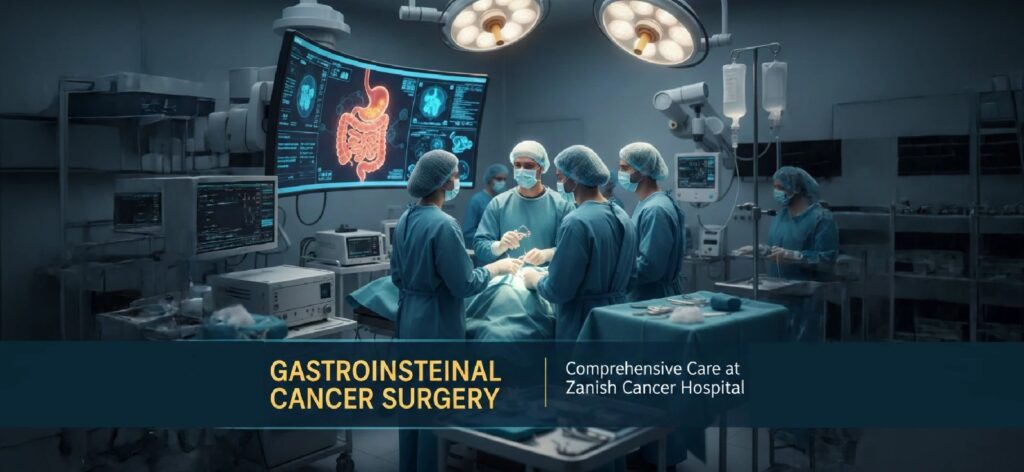
State-of-the-art surgical facilities: We utilize advanced operating theaters equipped with cutting-edge technology including high-definition laparoscopic systems, enabling precise, minimally invasive procedures when appropriate.
Multidisciplinary tumor board: Every GI cancer case is reviewed by our multidisciplinary team, ensuring comprehensive treatment planning that incorporates surgery, medical oncology, radiation oncology, pathology, and radiology expertise.
Comprehensive cancer care: Beyond surgery, we offer complete oncology services including chemotherapy, radiation therapy, targeted therapy, and immunotherapy, providing seamless integrated care under one roof.
Nutritional and supportive care: Our specialized oncology dietitians and palliative care team address the unique nutritional and symptom management needs of GI cancer patients throughout their treatment journey.
Advanced diagnostic capabilities: In-house pathology and radiology services provide rapid, accurate diagnoses and staging, enabling prompt treatment initiation.
Patient-centered approach: We recognize that cancer affects not just the body but also emotional and social wellbeing. Our support services include counseling, support groups, and care coordination to address all dimensions of your cancer experience.
Accessible care in Gujarat: Located in Ahmedabad, we serve patients throughout Gujarat and neighboring regions, offering convenient access to specialized GI cancer surgery without requiring travel to distant metropolitan centers.
Research and innovation: Our commitment to advancing cancer care includes participation in clinical trials and adoption of evidence-based innovations, ensuring our patients benefit from the latest developments in surgical oncology.
Living After GI Cancer Surgery
Life after gastrointestinal cancer surgery requires adjustment, but most patients adapt successfully with appropriate support:
Dietary modifications: GI surgery changes how your body processes food. Working with specialized dietitians helps you develop sustainable eating patterns that maintain nutrition while managing any digestive changes.
Symptom management: Some patients experience dumping syndrome, reflux, or altered bowel patterns after surgery. These symptoms often improve over time and can be managed with medications and dietary strategies.
Emotional wellbeing: Cancer survivorship brings psychological challenges. Support groups, counseling, and connection with other survivors provide valuable emotional support during recovery.
Long-term surveillance: Regular follow-up appointments monitor for recurrence and manage any treatment-related effects, ensuring early intervention if issues arise.
Conclusion: Expert Care When You Need It Most
Gastrointestinal cancer surgery represents a critical component of curative cancer treatment, offering the best chance for long-term survival and cure when performed by experienced specialists. If you’ve been diagnosed with a GI malignancy or are seeking expert evaluation for concerning symptoms, the surgical oncology team at Zanish Cancer Hospital provides the specialized expertise, advanced technology, and compassionate care you deserve.
Cancer treatment is complex, but you don’t have to navigate it alone. Our multidisciplinary team is committed to guiding you through every step of your journey, from initial diagnosis through treatment and beyond, with personalized care that addresses your unique medical needs and personal circumstances.
Take the first step: Contact Zanish Cancer Hospital today to schedule a consultation with our GI surgical oncology team. We’ll evaluate your condition, discuss all available treatment options, and develop a personalized care plan designed to achieve the best possible outcome. When facing gastrointestinal cancer, expert surgical care combined with comprehensive support can make all the difference in your treatment success and quality of life.
Medical Disclaimer: This article provides general information about gastrointestinal cancer surgery and should not be considered medical advice. Cancer treatment is highly individualized based on cancer type, stage, location, and patient factors. Always consult qualified oncology specialists for diagnosis, treatment recommendations, and medical guidance specific to your situation. Treatment outcomes vary, and no treatment guarantees cure or specific results.
Make Appointment
Address
1st Floor, Viva Atelier, Opp. B.D. Patel House, Near Sardar Patel Statue, Behind Sardar Patel Colony, Naranpura, Ahmedabad-380014. (Gujarat) India
Contact Us
+91 7433852300