
Introduction
Completing breast cancer surgery is a significant milestone — but for many women, it also marks the beginning of a new set of questions. What does breast cancer surgery recovery in Ahmedabad look like? How long will it take to feel like myself again? What support will I need, and where do I find it?
These are deeply human questions, and they deserve honest, compassionate answers.
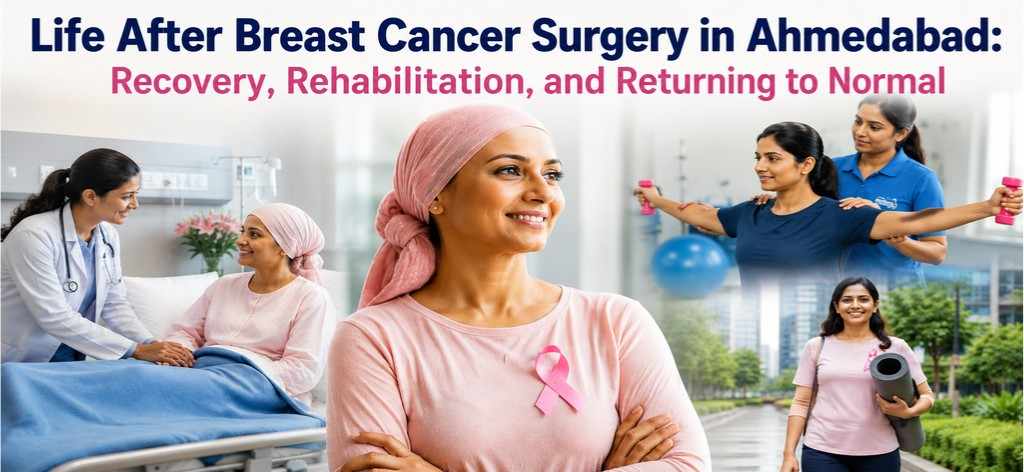
Recovery after breast cancer surgery is a journey that unfolds in stages — physical healing, emotional adjustment, and gradually reclaiming your daily life. The good news is that with the right medical support, a structured rehabilitation plan, and a caring team around you, most women return to a full and meaningful life after surgery.
This article covers everything you need to know — from the immediate post-operative period to long-term rehabilitation, emotional wellness, and breast reconstruction options — so you can approach recovery with clarity and confidence.
Understanding Breast Cancer Surgery: A Quick Overview
Breast cancer surgery typically falls into two categories:
- Lumpectomy (Breast-Conserving Surgery) — removes only the tumour and a small margin of surrounding tissue, preserving most of the breast
- Mastectomy — removes one or both breasts, either partially or completely, depending on the extent of the disease
The type of surgery recommended depends on the cancer stage, tumour size, location, genetic factors, and the patient’s own informed preferences. Both procedures are well-established, evidence-based treatments with strong clinical outcomes when combined with appropriate follow-up care.
Understanding which surgery you have had — or are planning — helps set realistic expectations for recovery.
What to Expect Immediately After Breast Cancer Surgery
The First 24 to 48 Hours
Immediately following surgery, patients are monitored in a recovery area before being shifted to their hospital room. During this period, you may experience:
- Soreness, swelling, or tightness around the surgical area
- Fatigue from anaesthesia and the surgical process
- Drain tubes near the incision site to remove excess fluid (common after mastectomy)
- Limited arm and shoulder movement on the operated side
Pain management is carefully handled by the medical team. Most patients describe the discomfort as manageable with prescribed medication.
The First Two Weeks at Home
After discharge, the focus shifts to wound healing and gentle activity. During this period:
- Keep the surgical site clean and dry as directed
- Avoid lifting heavy objects or strenuous arm movements
- Attend all scheduled follow-up appointments for drain removal and wound assessment
- Watch for signs of infection such as increased redness, warmth, or discharge and report them immediately
Rest is important, but short, gentle walks are encouraged to support circulation and reduce the risk of blood clots.
Recovery Timeline: How Long Does It Take?
One of the most common questions patients ask is — how long does recovery take after mastectomy in Ahmedabad?
While every individual heals differently, here is a general clinical framework:
Week 1–2: Rest, wound care, drain management, and limited movement. Most daily activities are restricted.
Week 3–4: Gradual return to light activities. Drain tubes are typically removed. Physiotherapy exercises often begin during this phase.
Week 6–8: Many patients resume normal daily activities, including light work. Driving is usually permitted once arm movement is comfortable and pain-free.
3–6 Months: Full physical recovery for most patients. Adjuvant treatments such as chemotherapy or radiation, if recommended, run concurrently and may affect energy levels.
Beyond 6 Months: Emotional recovery, body image adjustment, and return to full social and professional life continue to progress with support.
Note: Recovery timelines vary based on the type of surgery, individual health, and whether additional treatments are required.
Rehabilitation After Breast Cancer Surgery
Rehabilitation is a critical and often underemphasised part of breast cancer surgery recovery. A structured rehabilitation programme helps restore strength, mobility, and confidence.
Physiotherapy and Arm Exercises
After mastectomy or lumpectomy, many patients experience stiffness or reduced range of motion in the shoulder and arm on the operated side. A trained physiotherapist will guide you through:
- Gentle stretching and range-of-motion exercises
- Gradually progressive strengthening routines
- Techniques to manage tightness or scar tissue (cording)
Starting physiotherapy at the right time — typically after initial wound healing — significantly improves long-term functional outcomes.
Lymphoedema Awareness and Prevention
Lymphoedema — swelling in the arm caused by disruption to the lymphatic system during surgery — is a possible side effect, particularly after axillary lymph node removal. Early awareness and preventive care include:
- Avoiding cuts, burns, or infections in the affected arm
- Using compression garments if recommended
- Performing prescribed lymphatic drainage exercises
- Reporting any unusual swelling to your oncology team promptly
Early intervention significantly reduces the impact of lymphoedema on daily life.
Nutritional Support During Recovery
Good nutrition supports tissue healing, immune function, and energy restoration. During recovery, focus on:
- Adequate protein intake to support wound healing
- A diet rich in vegetables, fruits, whole grains, and healthy fats
- Staying well hydrated
- Discussing any supplements with your medical team before use
A clinical dietitian consultation, available at comprehensive cancer centres, can provide personalised guidance.
Emotional Recovery and Mental Wellbeing
Physical healing is only one dimension of life after breast cancer surgery. Emotional recovery is equally important and equally valid.
Many women experience a range of emotions after surgery — relief, grief, anxiety about recurrence, changes in body image, or uncertainty about the future. These feelings are normal and do not indicate weakness.
Support that makes a meaningful difference includes:
- Oncology counselling — speaking with a trained psychologist or counsellor who specialises in cancer care
- Peer support groups — connecting with other breast cancer survivors in Ahmedabad or Gujarat who understand your experience
- Open communication with loved ones — sharing your needs and allowing others to support you
- Mindfulness and stress reduction practices — yoga, meditation, and breathing exercises have evidence-based benefits for cancer recovery
Seeking emotional support is a sign of strength, not struggle.
Breast Reconstruction Options After Mastectomy in Ahmedabad
For women who have undergone mastectomy, breast reconstruction is a personal and medically valid option. It can be performed at the time of mastectomy (immediate reconstruction) or at a later stage (delayed reconstruction).
Common reconstruction approaches include:
- Implant-based reconstruction — using silicone or saline implants
- Autologous (flap) reconstruction — using tissue from another part of the body such as the abdomen or back
- Oncoplastic surgery — combining cancer surgery with plastic surgical techniques to preserve breast shape after lumpectomy
Reconstruction is a deeply personal decision. There is no single right choice — the best option depends on your cancer treatment plan, body type, personal preferences, and overall health. A detailed conversation with your surgical oncologist and reconstructive surgeon helps you make an informed decision.
Zanish Cancer Hospital's Role in Your Recovery Journey
At Zanish Cancer Hospital in Ahmedabad, we understand that surgery is not the end of care — it is the beginning of a new chapter that requires dedicated support at every stage.
Our breast cancer care programme is built around a multidisciplinary team that includes surgical oncologists, medical oncologists, radiation specialists, physiotherapists, oncology nurses, and counsellors — all working together under one roof to support your complete recovery.
We provide structured post-operative rehabilitation programmes tailored to each patient’s surgical procedure and personal health goals. Our physiotherapy team begins guided recovery exercises at the appropriate stage of healing, and our lymphoedema specialists offer preventive care and early management support.
For patients considering breast reconstruction, our surgical team offers detailed consultations to explore all options in a compassionate, pressure-free environment.
We also recognise the emotional dimensions of cancer recovery. Our patient support services include oncology counselling, peer support facilitation, and a dedicated care coordinator who remains your point of contact throughout the treatment journey.
Zanish Cancer Hospital is committed to serving patients from Ahmedabad, across Gujarat, and beyond — with evidence-based care, modern infrastructure, and a genuinely patient-first approach.
Disclaimer: All treatment and rehabilitation plans are individualised based on thorough medical assessment and developed in consultation with the patient and their care team.
Conclusion
Recovery after breast cancer surgery is a process — not a single moment. It requires physical healing, thoughtful rehabilitation, emotional support, and time. With the right guidance and care team beside you, returning to a full, meaningful life is an achievable and realistic goal.
If you or someone you love is preparing for breast cancer surgery or navigating post-surgical recovery in Ahmedabad, you do not have to face it alone.
Zanish Cancer Hospital is here to walk this journey with you — from surgery through recovery and beyond.
Reach out to our team today to schedule a consultation with our breast cancer specialists and take the next step toward healing with confidence.
Medical Disclaimer: The information provided in this article is for general educational purposes only and does not constitute medical advice. Individual recovery experiences vary. Please consult a qualified oncologist or healthcare professional for personalised medical guidance and treatment recommendations.
Frequently Asked Questions
Tongue cancer surgery typically involves removal of the tumor (glossectomy), a possible neck dissection to address affected lymph nodes, and reconstructive surgery to restore tongue function. The exact procedure depends on the tumor's size, stage, and location.
Look for a board-certified head and neck surgical oncologist with demonstrated experience in oral cancer surgeries and reconstructive procedures. Zanish Cancer Hospital has a specialized team of head and neck oncologists serving patients from across Gujarat.
Treatment planning is based on a thorough evaluation of the tumor's stage, size, and location, along with the patient's overall health. At Zanish Cancer Hospital, a multidisciplinary tumor board reviews each case to recommend the most appropriate surgical and adjuvant treatment approach.
Many patients regain meaningful levels of speech and swallowing function through dedicated rehabilitation. Regular follow-up care, speech therapy, dietary support, and emotional counselling are key pillars of recovery. Outcomes are significantly better when cancer is diagnosed at an early stage.
Early-stage tongue cancer (Stage I or II) has significantly better outcomes compared to advanced-stage disease. Prompt diagnosis followed by timely surgical intervention greatly improves the overall prognosis. This is why regular dental and oral health check-ups are strongly encouraged.
Make Appointment
Address
1st Floor, Viva Atelier, Opp. B.D. Patel House, Near Sardar Patel Statue, Behind Sardar Patel Colony, Naranpura, Ahmedabad-380014. (Gujarat) India
Contact Us
+91 7433852300