
Introduction
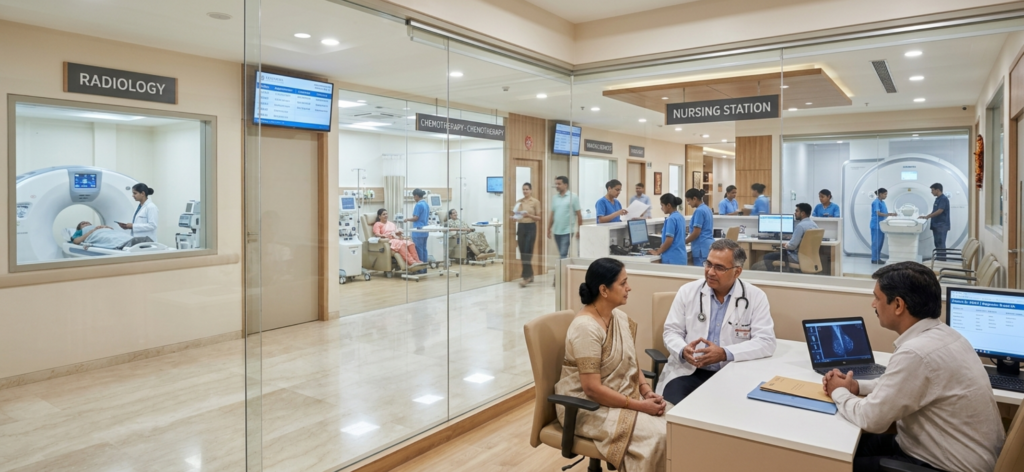
Receiving a cancer diagnosis raises immediate questions about who will be involved in your care and how different aspects of treatment will be coordinated. Cancer is rarely a condition that one specialist can manage alone. Effective treatment often requires surgery, systemic therapy, radiation, pathology, radiology, and supportive care working in close coordination. This is the foundation of multidisciplinary cancer care in Ahmedabad, an approach in which specialists from different disciplines collaborate formally to design and deliver each patient’s treatment plan. At Zanish Cancer Hospital, this model is not an added feature but the core structure through which oncology care is delivered. This article explains what multidisciplinary cancer care involves, why it produces better outcomes than fragmented single-specialist management, and what patients can expect when they enter a team-based oncology programme.
What Multidisciplinary Cancer Care Means
Multidisciplinary cancer care refers to a structured model in which specialists across relevant clinical disciplines meet regularly to review individual patient cases and make collective treatment decisions. Rather than a patient moving sequentially from one doctor to the next, each making independent recommendations, the multidisciplinary model brings those professionals together to evaluate the case simultaneously.
The central mechanism for this collaboration is the tumour board consultation, also referred to as a multidisciplinary team meeting. During these sessions, clinicians review imaging, pathology reports, laboratory findings, and the patient’s medical history together. Each specialist contributes their perspective, and the group reaches a consensus recommendation that reflects the full breadth of oncological knowledge available.
This process ensures that treatment decisions account for all relevant factors at once, rather than being shaped by the viewpoint of a single speciality in isolation.
Who Is Part of a Multidisciplinary Oncology Team
The composition of a multidisciplinary team varies depending on the cancer type being treated, but typically includes the following core members.
Surgical oncologist: Evaluates whether surgery is appropriate, determines the extent and timing of any surgical intervention, and assesses resectability of the tumour.
Medical oncologist: Oversees systemic treatments including chemotherapy, targeted therapy, immunotherapy, and hormonal therapy. This specialist also coordinates overall treatment sequencing.
Radiation oncologist: Assesses whether radiation therapy is indicated, determines the appropriate technique and dosing, and coordinates treatment delivery.
Radiologist: Reviews all imaging including CT scans, MRI, and PET scans, providing critical input on tumour location, size, spread, and response to treatment.
Pathologist: Analyses biopsy and surgical specimens to confirm diagnosis, tumour type, grade, and molecular characteristics that guide treatment decisions.
Depending on the cancer type and patient needs, the team may also include palliative care specialists, oncology nurses, nutritionists, psycho-oncologists, and patient navigators who support the non-clinical dimensions of care.
Why Team-Based Oncology Produces Better Outcomes
Research consistently supports the multidisciplinary model as the standard of care in oncology. Several mechanisms explain why integrated cancer treatment leads to improved patient outcomes compared with fragmented specialist-by-specialist care.
Reduced diagnostic and treatment delays: When all specialists review a case simultaneously, the time between diagnosis and treatment initiation is often shorter than when patients must schedule sequential appointments with individual doctors.
More accurate staging and treatment planning: Cancer staging, which determines the extent of disease spread, benefits from the combined input of radiology, pathology, and clinical oncology. Errors or incomplete staging that might occur in a single-specialist review are more readily identified and corrected in a group setting.
Avoidance of conflicting treatment recommendations: Without a coordinated team approach, patients sometimes receive conflicting advice from different specialists. The tumour board model resolves these conflicts before they reach the patient, ensuring that the recommendation delivered is unified and clinically sound.
Access to clinical trials and advanced treatment options: Multidisciplinary teams are better positioned to identify patients who may benefit from clinical trial participation or emerging treatment protocols, as the collective knowledge of the team spans a broader range of options than any single specialist can monitor alone.
Holistic patient management: Comprehensive oncology care addresses not only the tumour but the whole patient. Team-based oncology naturally incorporates supportive care, nutritional guidance, psychological support, and rehabilitation planning into the overall treatment framework.
What Patients Experience in a Multidisciplinary Programme
For patients, entering a multidisciplinary care programme typically begins with an initial comprehensive assessment. All relevant records, imaging, and biopsy results are gathered and reviewed before the first tumour board meeting at which the case is discussed.
Following the tumour board consultation, the patient receives a unified treatment recommendation. This is presented clearly by the primary treating oncologist, who explains the reasoning behind the plan and answers questions. Patients are encouraged to ask about alternatives, the sequence of treatments, and what each phase of care will involve.
Throughout treatment, the team continues to meet and review the patient’s progress. If circumstances change, such as a shift in tumour response or the emergence of side effects, the plan is reassessed collaboratively. This ongoing review is one of the most important practical advantages of the multidisciplinary model, as it ensures that the treatment plan evolves with the patient’s clinical reality rather than remaining fixed to an initial decision.
For patients travelling from other parts of Gujarat to access cancer care in Ahmedabad, the multidisciplinary model also reduces the number of separate appointments required. Having multiple specialists review a case within a single structured meeting is more efficient and less burdensome than visiting each specialist independently across multiple days or locations.
Zanish Cancer Hospital's Role in Multidisciplinary Cancer Care
At Zanish Cancer Hospital in Ahmedabad, multidisciplinary cancer care is delivered through formal tumour board meetings that bring together surgical, medical, and radiation oncologists alongside radiologists, pathologists, and supporting clinical staff. Every new patient case is reviewed through this process, and ongoing cases are revisited as treatment progresses.
The hospital’s team-based oncology approach reflects current evidence-based standards for cancer care. Treatment plans developed through the tumour board process are communicated to patients clearly, with time allocated for questions and discussion. The goal is to ensure that each patient understands the reasoning behind their recommended plan and feels supported throughout the process.
Zanish Cancer Hospital serves patients from Ahmedabad and across Gujarat, offering a coordinated oncology programme that consolidates specialist expertise under one roof. Patients who have previously received fragmented care or conflicting advice are welcome to seek a formal multidisciplinary review of their case.
Conclusion
Multidisciplinary cancer care in Ahmedabad represents the current gold standard for oncology treatment planning and delivery. By bringing together specialists from surgery, medical oncology, radiation oncology, radiology, and pathology, the team-based model ensures that every treatment decision is informed by the full scope of available expertise. For patients, this means more accurate diagnoses, better-coordinated treatment plans, and a care experience that addresses both clinical and personal needs.
If you or a family member has received a cancer diagnosis and would like to understand how a multidisciplinary approach can support your treatment journey, the team at Zanish Cancer Hospital is available for consultation. Contact the hospital to schedule an appointment and receive a comprehensive, team-based evaluation of your case.
Disclaimer: This article is intended for general informational purposes only and does not constitute medical advice. Please consult a qualified oncologist for personalised clinical guidance.
Make Appointment
Address
1st Floor, Viva Atelier, Opp. B.D. Patel House, Near Sardar Patel Statue, Behind Sardar Patel Colony, Naranpura, Ahmedabad-380014. (Gujarat) India
Contact Us
+91 7433852300