
Introduction
When a cancer diagnosis arrives, one of the first questions patients ask is: “What is the best treatment for me?” The answer is increasingly found through precision oncology — a modern approach to cancer care that moves beyond one-size-fits-all treatment and tailors therapy to the unique biological profile of each patient’s cancer.
For patients seeking precision oncology in Ahmedabad, access to genomic testing and personalised cancer treatment has improved considerably in recent years. Rather than relying solely on where cancer originates in the body, precision oncology examines the specific genetic mutations, proteins, and molecular characteristics driving a tumour — and uses that information to guide treatment decisions.
This article explains what precision oncology involves, how genomic profiling and biomarker testing work in practice, what patients can realistically expect from personalised medicine, and how Zanish Cancer Hospital supports patients in Ahmedabad and across Gujarat through this advanced, evidence-based approach to cancer care.
What Is Precision Oncology?
Precision oncology — also referred to as personalised medicine in oncology — is a treatment strategy that uses detailed molecular and genetic analysis of a patient’s cancer to identify the most effective therapeutic approach.
Traditional cancer treatment has historically been based on tumour location: lung cancer treated one way, breast cancer another. Precision oncology challenges this model by recognising that two patients with the same cancer type may have entirely different genetic drivers behind their tumours — and therefore respond very differently to the same treatment.
By identifying these individual differences, oncologists can select therapies most likely to be effective for a specific patient, while avoiding treatments unlikely to benefit them.
How Genomic Profiling Works
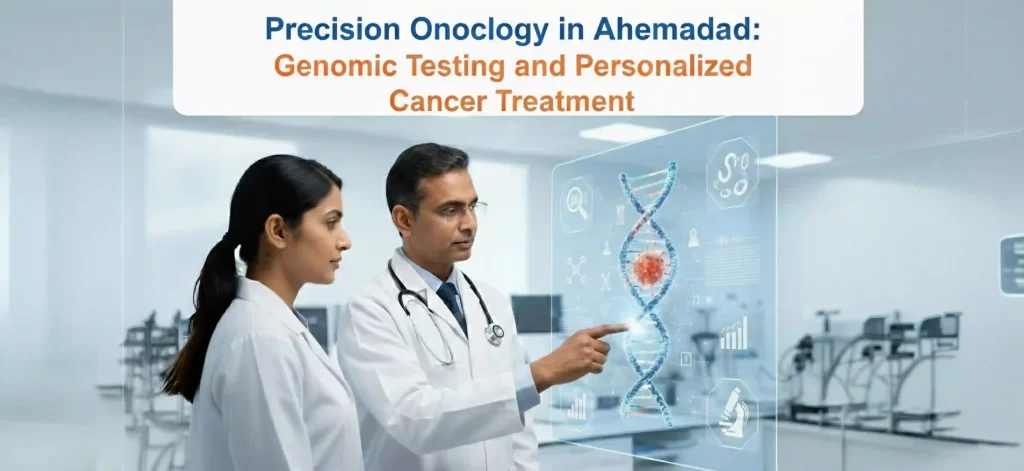
Genomic profiling — sometimes called molecular profiling or tumour genomic testing — is the cornerstone of precision oncology. It involves analysing the DNA, RNA, and proteins within a tumour to identify specific mutations or alterations that may be driving cancer growth.
The process typically involves:
- Tissue biopsy or liquid biopsy: A sample of tumour tissue or a blood sample is collected for analysis. Liquid biopsies, which detect tumour DNA circulating in the bloodstream, are a less invasive option increasingly available in India.
- Next-Generation Sequencing (NGS): This advanced technology sequences large portions of the tumour’s genome simultaneously, identifying mutations across hundreds of cancer-related genes in a single test.
- Biomarker identification: The results highlight specific biomarkers — measurable biological indicators such as gene mutations, protein expressions, or chromosomal changes — that inform treatment decisions.
- Oncologist interpretation: A specialist in molecular diagnostics and oncology reviews the genomic report and correlates findings with available targeted therapies or clinical trials.
Genomic profiling does not replace conventional diagnostics — it enhances them. It works alongside pathology reports, imaging, and clinical assessment to build a complete picture of the patient’s cancer.
Biomarker Testing: Why It Matters
Biomarker testing is a specific component of genomic profiling focused on identifying markers that predict how a cancer will behave and how it is likely to respond to particular treatments.
Some of the most clinically significant biomarkers in oncology today include:
- EGFR mutations in non-small cell lung cancer, which predict response to targeted EGFR inhibitor drugs
- HER2 overexpression in breast and gastric cancers, guiding the use of HER2-targeted therapies
- BRCA1/BRCA2 mutations in breast and ovarian cancers, relevant for PARP inhibitor therapy and surgical risk assessment
- PD-L1 expression levels, which help determine eligibility for immunotherapy (checkpoint inhibitors)
- MSI-H (Microsatellite Instability-High) status, which predicts strong response to immunotherapy across multiple cancer types
- RAS/RAF mutations in colorectal cancer, which affect eligibility for certain targeted agents
Biomarker testing is now recommended as a standard part of diagnostic workup for several cancer types by major oncology bodies, including the American Society of Clinical Oncology (ASCO) and the European Society for Medical Oncology (ESMO). Increasingly, Indian oncology centres are integrating these guidelines into routine clinical practice.
Targeted Cancer Therapy: Treatment Guided by Biology
When genomic profiling identifies a specific actionable mutation, targeted cancer therapy becomes a treatment option. Unlike conventional chemotherapy — which broadly attacks rapidly dividing cells — targeted therapies are designed to interfere with specific molecules involved in tumour growth and survival.
Key advantages of targeted therapy include:
- Greater specificity, meaning cancer cells are more selectively affected
- Potentially fewer side effects compared to traditional chemotherapy in many cases
- Oral administration options for certain targeted agents, improving patient convenience
- The ability to address cancers that have become resistant to standard treatments
It is important to note that not every patient will have an actionable mutation, and not every actionable mutation has a corresponding approved targeted therapy. Genomic results must always be interpreted by an experienced oncologist in the context of the patient’s overall clinical situation.
Immunotherapy and the Role of Molecular Diagnostics
Molecular diagnostics Gujarat — the laboratory analysis of cancer at the molecular level — also plays a central role in determining immunotherapy eligibility. Immunotherapy works by enabling the patient’s own immune system to recognise and attack cancer cells.
Tests such as PD-L1 immunohistochemistry (IHC) and MSI testing help predict which patients are most likely to benefit from immune checkpoint inhibitors. These treatments have demonstrated durable responses in eligible patients across cancer types including lung, bladder, melanoma, cervical, and colorectal cancers.
Decisions around immunotherapy eligibility require careful molecular testing and specialist evaluation — they should never be made based on cancer type alone.
Precision Oncology in the Context of Gujarat's Healthcare Landscape
For patients in Ahmedabad and across Gujarat, access to advanced molecular diagnostics and personalised cancer care has historically required travel to Mumbai, Delhi, or other major metros. This is changing.
Ahmedabad has seen meaningful growth in oncology infrastructure over the past several years, with increasing availability of NGS-based genomic testing, molecular pathology services, and multidisciplinary tumour boards that include specialists in precision medicine. This shift is particularly significant for patients with rare cancers, treatment-resistant disease, or complex genomic profiles who previously had limited local options.
Patients should, however, be aware that not all genomic tests are equivalent in scope or quality. It is important to discuss with your oncologist which specific test is appropriate for your cancer type, what the test report will and will not cover, and how results will be translated into a treatment plan.
What Patients Can Realistically Expect
Precision oncology is a powerful tool, but it is important to approach it with informed, realistic expectations:
- Genomic profiling results typically take two to four weeks, depending on the test and laboratory
- Not all tumours will have identifiable actionable mutations — in some cases, results may not change the treatment plan
- Targeted therapies, while often effective, can be associated with specific side effects and may eventually lead to resistance requiring treatment adjustments
- Precision oncology works best as part of a comprehensive, multidisciplinary care plan — not as a standalone solution
Open, honest communication with your oncologist about what genomic testing can and cannot offer is essential to making well-informed decisions.
Zanish Cancer Hospital's Role in Precision Oncology
At Zanish Cancer Hospital in Ahmedabad, precision oncology is integrated into the cancer care pathway as a standard consideration for eligible patients. The hospital’s oncology team works with molecular diagnostics to ensure that treatment planning is informed by the most relevant biological data available for each patient.
The multidisciplinary team at Zanish Cancer Hospital includes medical oncologists, surgical oncologists, pathologists, and genetic counsellors who collaborate to review genomic profiling results and recommend evidence-based personalised treatment strategies. For patients with hereditary cancer risk identified through biomarker testing, genetic counselling services are also available.
The hospital supports patients through each step of the precision oncology process — from explaining the purpose and process of genomic testing, to interpreting complex results in plain language, to coordinating access to targeted therapies or relevant clinical trials where appropriate.
Zanish Cancer Hospital is located in Ahmedabad and serves patients from across Gujarat, including Surat, Vadodara, Gandhinagar, Rajkot, and surrounding regions — making specialist-level precision oncology care more accessible to a wider patient population.
Conclusion and Next Steps
Precision oncology represents one of the most significant advances in cancer medicine in recent decades. By using genomic profiling, biomarker testing, and molecular diagnostics to guide treatment, oncologists can move beyond generalised approaches and deliver care tailored to each patient’s unique cancer biology.
If you or a loved one has received a cancer diagnosis, asking your oncologist about genomic testing and personalised treatment options is a worthwhile and empowered step. Not every patient will be a candidate, but for those who are, precision oncology can meaningfully influence treatment selection and outcomes.
Disclaimer: This article is for general informational purposes only and does not constitute medical advice. Treatment decisions should always be made in consultation with a qualified oncologist based on your individual diagnosis and medical history.
To learn more about precision oncology services at Zanish Cancer Hospital, Ahmedabad, or to schedule a consultation with our oncology team, please contact the hospital directly.
Make Appointment
Address
1st Floor, Viva Atelier, Opp. B.D. Patel House, Near Sardar Patel Statue, Behind Sardar Patel Colony, Naranpura, Ahmedabad-380014. (Gujarat) India
Contact Us
+91 7433852300